Hybrid quantum image classification and federated learning for hepatic steatosis diagnosis
Abstract page for arXiv paper 2311.02402: Hybrid quantum image classification and federated learning for hepatic steatosis diagnosis
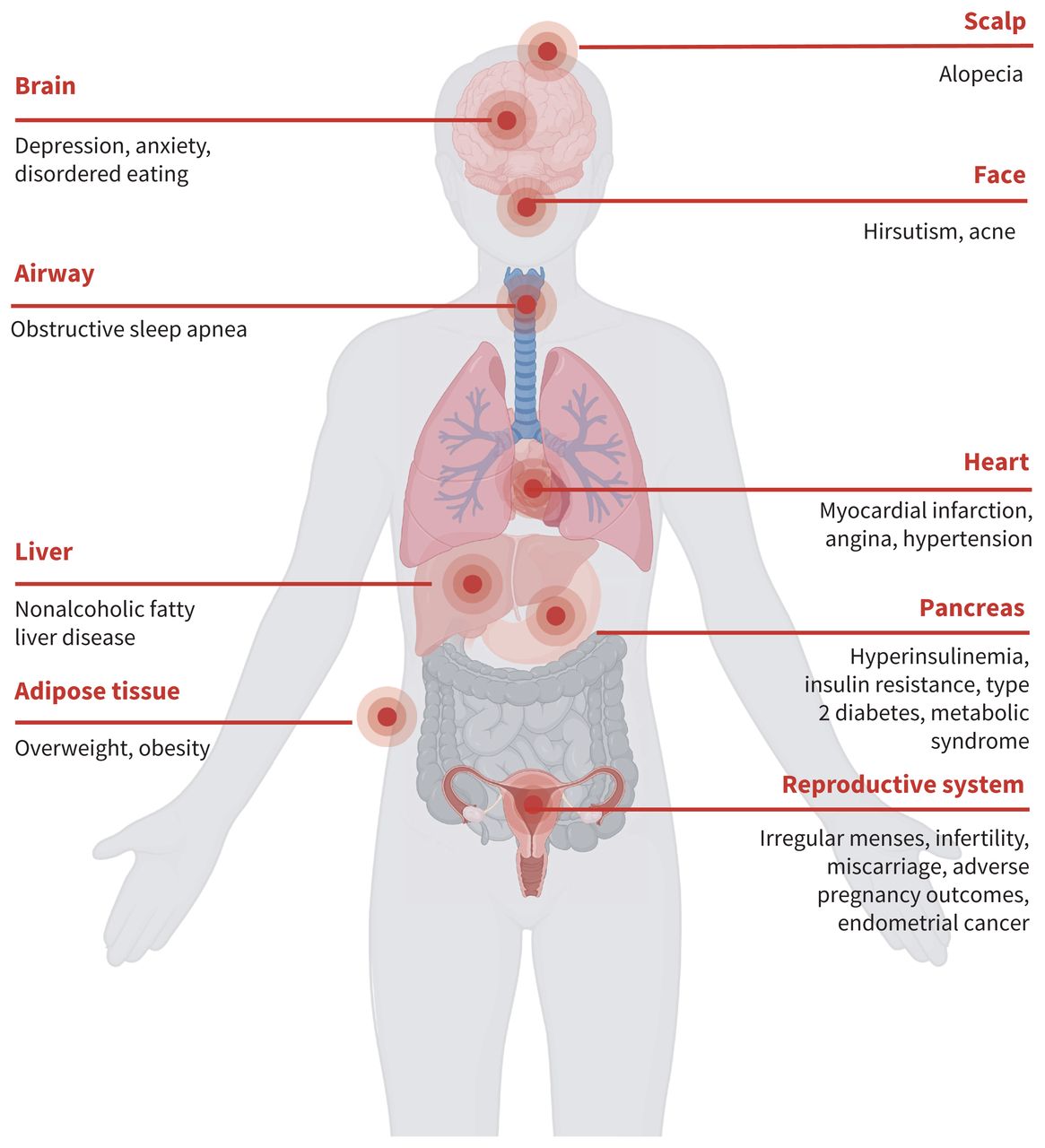

Fatty Liver Disease
Distinct Brain-Body Links in Depression: Nucleus Accumbens and Insula Insights by BMI
A recent study examined the relationship between depressive symptoms, body composition, and brain structure volumes in women with varying body mass index (BMI) levels. Among 265 participants, depressive symptoms were linked to nucleus accumbens volume in overweight/obese women (BMI ≥25 kg/m²) and insula volume in normal-/underweight women (BMI <25 kg/m²). In overweight/obese women, nucleus accumbens volume inversely correlated with depressive severity and visceral fat percentage, suggesting ties to neuroinflammation and metabolic disruptions. In contrast, insula volume in normal-/underweight women was positively associated with fat-free mass and negatively with depressive symptoms, indicating a potential role for physical activity and muscle-derived factors like myokines.
These findings reveal distinct brain-body interactions in depression based on body composition. Overweight/obese women were associated with atypical depression features such as increased appetite and visceral fat, while normal-/underweight women exhibited melancholic traits like reduced muscle mass and hypercortisolemia. While the study highlights the complexity of brain and body interactions in depression, further research is necessary to deepen understanding and develop targeted treatments for these subgroups.
Reference: Łapińska L, Szum-Jakubowska A, Krentowska A, et al. The relationship between brain structure volumes, depressive symptoms and body composition in obese/overweight and normal-/underweight women. Sci Rep. 2024;14(1):21021. doi: 10.1038/s41598-024-71924-z.
am ha re edited
PA-C
Arizona State University
Abstract page for arXiv paper 2311.02402: Hybrid quantum image classification and federated learning for hepatic steatosis diagnosis
Thermal ablation is the standard of care treatment modality with curative intent for early-stage non-resectable hepatocellular carcinoma (HCC), but a durable response is limited—with up to 40% of HCC patients eventually experiencing local recurrence on post-treatment surveillance. While thermal ablation has been established to cause immediate cell death in the center of the thermal ablation zone, its metabolic impact in the peri-ablational region remains unclear. We aimed to elucidate the metabolic mechanism by which Galectin-1 (Gal-1) promotes thermal-ablation-induced hyperthermia resistance in HCC and demonstrate the therapeutic potential of inhibiting Gal-1 in combination with thermal ablation in vivo.
Proteomic analysis was performed using an untargeted approach on pre-ablation formalin-fixed paraffin-embedded (FFPE) biopsy specimens of thermal ablation responders (n=32) and nonresponders (n=23). Gal-1 was found to be overexpressed in thermal ablation nonresponders compared to responders. Moreover, HCC with Gal-1 overexpression demonstrated reduced sensitivity to hyperthermia in vitro and increased utilization of glycolysis and downstream TCA cycle under hyperthermia-induced stress. Gal-1-overexpressing HCC enhanced its metabolic utilization through Gal-1-facilitated GM1-ganglioside breakdown, producing galactose to increase the metabolic influxes into glycolysis and consequently the downstream TCA cycle. In vivo studies showed that inhibiting Gal-1 in combination with thermal ablation significantly reduced tumor size compared to either monotherapy thermal ablation or Gal-1 inhibition alone.
Gal-1 can mediate hyperthermia resistance in HCC and can potentially be modulated as a therapeutic target to reduce rapid progression after thermal ablation.
A recent study examined the relationship between depressive symptoms, body composition, and brain structure volumes in women with varying body mass index (BMI) levels. Among 265 participants, depressive symptoms were linked to nucleus accumbens volume in overweight/obese women (BMI ≥25 kg/m²) and insula volume in normal-/underweight women (BMI <25 kg/m²). In overweight/obese women, nucleus accumbens volume inversely correlated with depressive severity and visceral fat percentage, suggesting ties to neuroinflammation and metabolic disruptions. In contrast, insula volume in normal-/underweight women was positively associated with fat-free mass and negatively with depressive symptoms, indicating a potential role for physical activity and muscle-derived factors like myokines.
These findings reveal distinct brain-body interactions in depression based on body composition. Overweight/obese women were associated with atypical depression features such as increased appetite and visceral fat, while normal-/underweight women exhibited melancholic traits like reduced muscle mass and hypercortisolemia. While the study highlights the complexity of brain and body interactions in depression, further research is necessary to deepen understanding and develop targeted treatments for these subgroups.
Reference: Łapińska L, Szum-Jakubowska A, Krentowska A, et al. The relationship between brain structure volumes, depressive symptoms and body composition in obese/overweight and normal-/underweight women. Sci Rep. 2024;14(1):21021. doi: 10.1038/s41598-024-71924-z.
am ha re edited
PA-C
Abstract page for arXiv paper 2311.02402: Hybrid quantum image classification and federated learning for hepatic steatosis diagnosis
deon franklin
PA-C, MMS,University/College (Graduate-level nursing program),ANCC (American Nurses Credentialing Center)
Abstract page for arXiv paper 2412.04884: AI-Driven Non-Invasive Detection and Staging of Steatosis in Fatty Liver Disease Using a Novel Cascade Model and Information Fusion Techniques
dona feble johny
MSN, NP-s
Thermal ablation is the standard of care treatment modality with curative intent for early-stage non-resectable hepatocellular carcinoma (HCC), but a durable response is limited—with up to 40% of HCC patients eventually experiencing local recurrence on post-treatment surveillance. While thermal ablation has been established to cause immediate cell death in the center of the thermal ablation zone, its metabolic impact in the peri-ablational region remains unclear. We aimed to elucidate the metabolic mechanism by which Galectin-1 (Gal-1) promotes thermal-ablation-induced hyperthermia resistance in HCC and demonstrate the therapeutic potential of inhibiting Gal-1 in combination with thermal ablation in vivo.
Proteomic analysis was performed using an untargeted approach on pre-ablation formalin-fixed paraffin-embedded (FFPE) biopsy specimens of thermal ablation responders (n=32) and nonresponders (n=23). Gal-1 was found to be overexpressed in thermal ablation nonresponders compared to responders. Moreover, HCC with Gal-1 overexpression demonstrated reduced sensitivity to hyperthermia in vitro and increased utilization of glycolysis and downstream TCA cycle under hyperthermia-induced stress. Gal-1-overexpressing HCC enhanced its metabolic utilization through Gal-1-facilitated GM1-ganglioside breakdown, producing galactose to increase the metabolic influxes into glycolysis and consequently the downstream TCA cycle. In vivo studies showed that inhibiting Gal-1 in combination with thermal ablation significantly reduced tumor size compared to either monotherapy thermal ablation or Gal-1 inhibition alone.
Gal-1 can mediate hyperthermia resistance in HCC and can potentially be modulated as a therapeutic target to reduce rapid progression after thermal ablation.
dona feble johny
MSN, NP-s
Read the latest Research articles in Hepatology from Scientific Reports
dona feble johny
MSN, NP-s
dona feble johny
MSN, NP-s
Thermal ablation is the standard of care treatment modality with curative intent for early-stage non-resectable hepatocellular carcinoma (HCC), but a durable response is limited—with up to 40% of HCC patients eventually experiencing local recurrence on post-treatment surveillance. While thermal ablation has been established to cause immediate cell death in the center of the thermal ablation zone, its metabolic impact in the peri-ablational region remains unclear. We aimed to elucidate the metabolic mechanism by which Galectin-1 (Gal-1) promotes thermal-ablation-induced hyperthermia resistance in HCC and demonstrate the therapeutic potential of inhibiting Gal-1 in combination with thermal ablation in vivo.
Proteomic analysis was performed using an untargeted approach on pre-ablation formalin-fixed paraffin-embedded (FFPE) biopsy specimens of thermal ablation responders (n=32) and nonresponders (n=23). Gal-1 was found to be overexpressed in thermal ablation nonresponders compared to responders. Moreover, HCC with Gal-1 overexpression demonstrated reduced sensitivity to hyperthermia in vitro and increased utilization of glycolysis and downstream TCA cycle under hyperthermia-induced stress. Gal-1-overexpressing HCC enhanced its metabolic utilization through Gal-1-facilitated GM1-ganglioside breakdown, producing galactose to increase the metabolic influxes into glycolysis and consequently the downstream TCA cycle. In vivo studies showed that inhibiting Gal-1 in combination with thermal ablation significantly reduced tumor size compared to either monotherapy thermal ablation or Gal-1 inhibition alone.
Gal-1 can mediate hyperthermia resistance in HCC and can potentially be modulated as a therapeutic target to reduce rapid progression after thermal ablation.
JUDITH SAUNDERS
MPH, RPA-C, AAHIVM,University/College (Graduate-level nursing program),ANCC (American Nurses Credentialing Center)
This study evaluates the use of infliximab, a TNF-alpha inhibitor, in treating patients with autoimmune hepatitis, focusing on its effectiveness and safety profile.
Josh Hamilton
DNP, RN/PMH-BC, FNP-C, PMHNP-BC, CNE, CTMH, CNE, CLNC, FAANP